Regenerative Settlements
A way of living on land that actively contributes to the regeneration of natural systems, while at the same time supporting the regeneration of human communities and individuals.
What is Re-Set?
Re-Set- Regenerative Settlement – is a way of living on land that actively contributes to the regeneration of natural systems, while at the same time supporting the regeneration of human communities and individuals.
Conventional development is expected to damage the land it occupies. Nature is cleared, carbon released, water systems compromised. Mitigation is then sought – often off-site, disconnected from the people who will live there.
Re-Set turns this on its head. There is no need for damage mitigation, because damage is not the starting point. And rather than development being ‘sustainable’ by virtue of where it is located, Re-Set generates its own sustainability through what it is and how it functions. It can boost the environmental, social and economic outcomes of a thriving settlement, and help transition one which is not.
What Re-Set looks like in practice
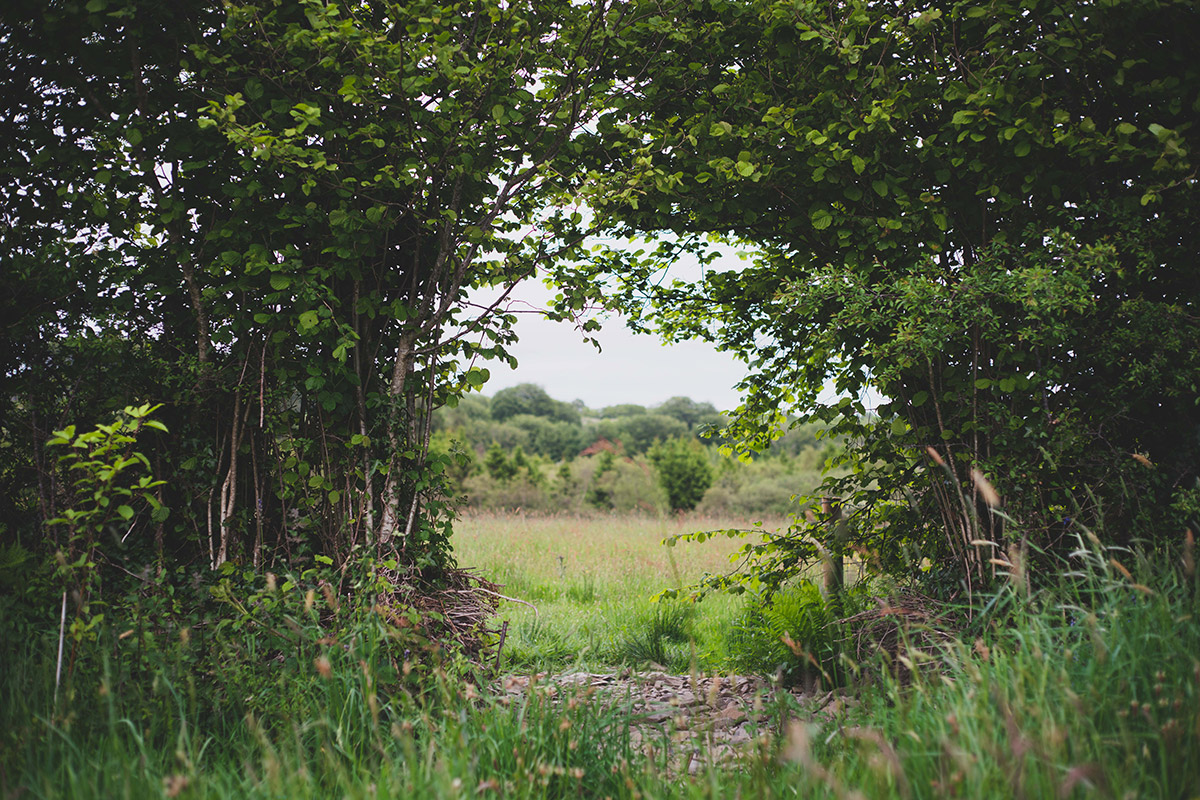
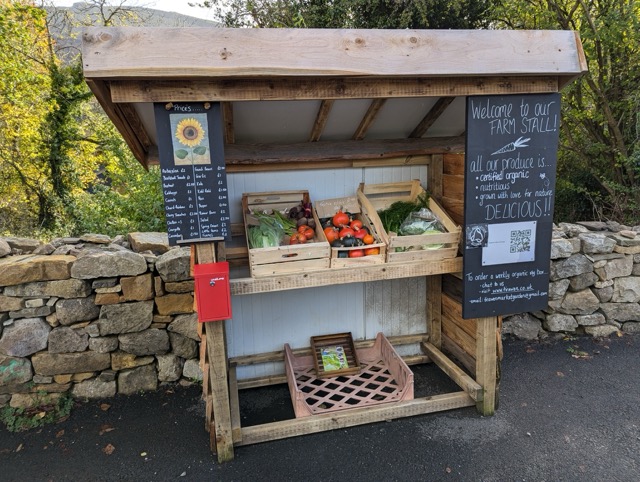
In practice, a Re-Set is likely to be broadly self-sustaining in food, energy and water, provide livelihoods for residents, be ultra-low carbon, increase ecosystem function, and be a living place of ongoing learning and connection.
It can take many forms, depending on geography, scale and the intentions of the people involved. What unites them is that the land, nature, and community are understood as one interconnected system – and that human agency benefits the whole, rather than degrading it.
Every place, however small or remote, whatever its size or location, needs a path to a regenerative future.


Beyond Sustainable Development
Regenerative is not simply another word for sustainable. ‘Sustainable development’ has proved a flawed concept, capable of slowing environmental breakdown but not reversing it. Its core ambition, to meet the needs of the present without compromising future generations, has clearly not been achieved.
This is because sustainability is fundamentally a conservation-based perspective. It asks: how do we reduce our negative impacts to conserve the natural world?
Regenerative development asks a different question: how do we increase human impacts in ways that are consciously and broadly beneficial? How can humans serve as sources of healing and regeneration for every living system they affect?
This is a profound shift in the human occupation of land – from doing less harm, to actively doing good.
A whole-systems approach
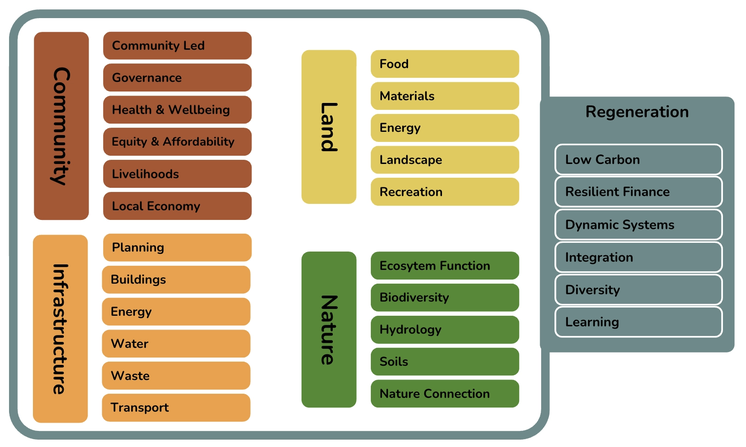
Regenerative Settlement is grounded in a whole-systems understanding of how the world works. Everything is interconnected. Natural, social, cultural, economic and ecological. Nature and our social and economic concerns dimensions are not separate concerns entities to be balanced or traded against each other – they are facets of the same living system rooted in natural systems and the Earth.
They need to be harmonised so that all benefit simultaneously.

What are we doing?
We have developed a ReSet Framework and are building a comprehensive Re-Set Handbook which will give detailed guidance for those wanting to create Regenerative Settlements, allow planners to understand and evaluate proposals, and show how landowners can contribute.
We’ll show you that Re-Set just makes sense, ecologically, socially and economically too.
Stay in the loop
Sign up to our newsletter to hear about the latest news and developments.