Our Story:
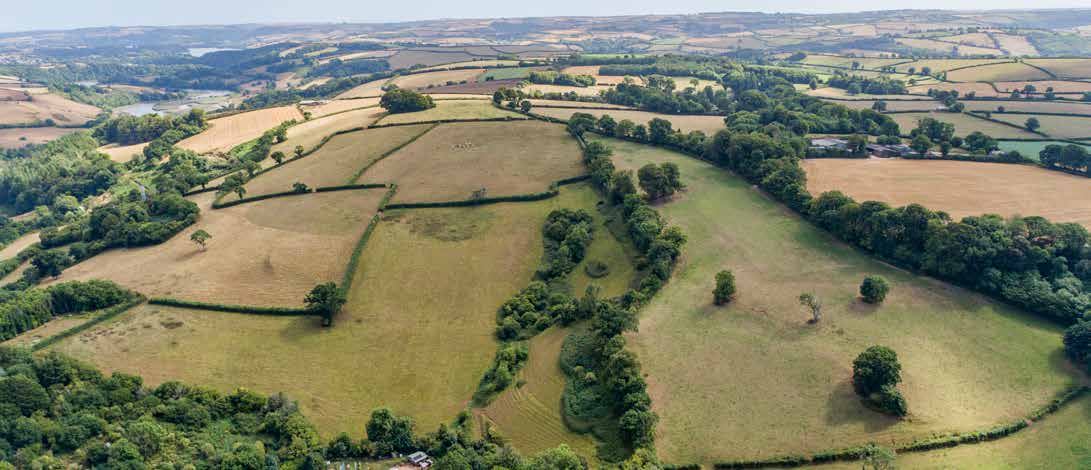
For thousands of years we lived much closer to land and nature. Our separation from nature is now at the root of many of the interconnected problems we face. We cannot escape our fundamental connection to all life on Earth. Our physical survival, our wellbeing, and something essential to our spirit all rely on it. Separated, our future is at best impoverished and at worst impossible.
Regenerative Settlement is a response to this. Not a rejection of human progress and innovation, but a way of placing it back into mutually beneficial relationship with nature – for the benefit of all life.
Where Re-Set comes from
Re-Set was founded by James Shorten, a planner with more than 30 years of experience working across rural and urban areas. His thinking has been shaped by a career spent grappling with what planning is actually for – and increasingly, what it could and should be.
Early in his career, James was inspired by the deep ecology movement, by James Lovelock’s work on Gaia, and by the emergence of sustainable development through the Brundtland Commission. These put in words something he had always felt – the importance of the natural world and our multiple connections with it.
Over decades of practice, James came to see that the planning system – particularly in its approach to rural areas – had become overly focused on preventing and reducing harm, rather than on enabling beneficial and necessary change. Rather than charting creative courses towards greater sustainability, resilience and community wellbeing, it had too often focused on avoiding the worst excesses of development rather than identifying pathways to genuinely better futures.
This matters now more than ever. Communities and economies face accelerating, overlapping crises – ecological, climatic, social and economic – that demand not incremental adjustment but genuinely new ways of seeing problems and finding solutions. Development, and planning, need to step up to that.
A different approach
Re-Set grew from the conviction that development – and housing in particular – can be a powerful catalyst for wider, positive change across whole land use systems. Rather than something grudgingly accepted, it can be the trigger for broad nature recovery, regenerative food growing, reconnection to land and community, education, recreation and genuine health and wellbeing.
But this only works if we think about the whole land use system, not just ‘development’ itself. We cannot harmonise with natural systems or obtain the greatest benefits for people and nature by planning too narrowly.
It also recognises that every place is different. The path to a regenerative future is not the same everywhere – but we can all learn from each other. Re-Set is place-based because life is rooted in place and linked inseparably with community. These two sides of the same coin are the foundation from which everything else grows.
What we do
- Re-Set is a Community Interest Company working to support people and communities who want to develop and live regeneratively. We do this through:
- The Re-Set Handbook – a practical, comprehensive guide to planning and delivering Regenerative Settlement, freely available online
- Knowledge and thinking – developing and sharing ideas about what regenerative development means, how it works, and where it is already happening
- Support and collaboration – working alongside projects, communities and practitioners who are trying to do things differently
A note on this work
Regenerative Settlement is not a finished design to be delivered. It is an ongoing process of learning, adaptation and coevolution – more like a dynamic ecosystem than a blueprint. We are building understanding through real projects and the people committed to them, adjusting as we learn.
The living world does not work from fixed plans.
Neither do we.